Design Insights May 5, 2025
By Zaina Rafique
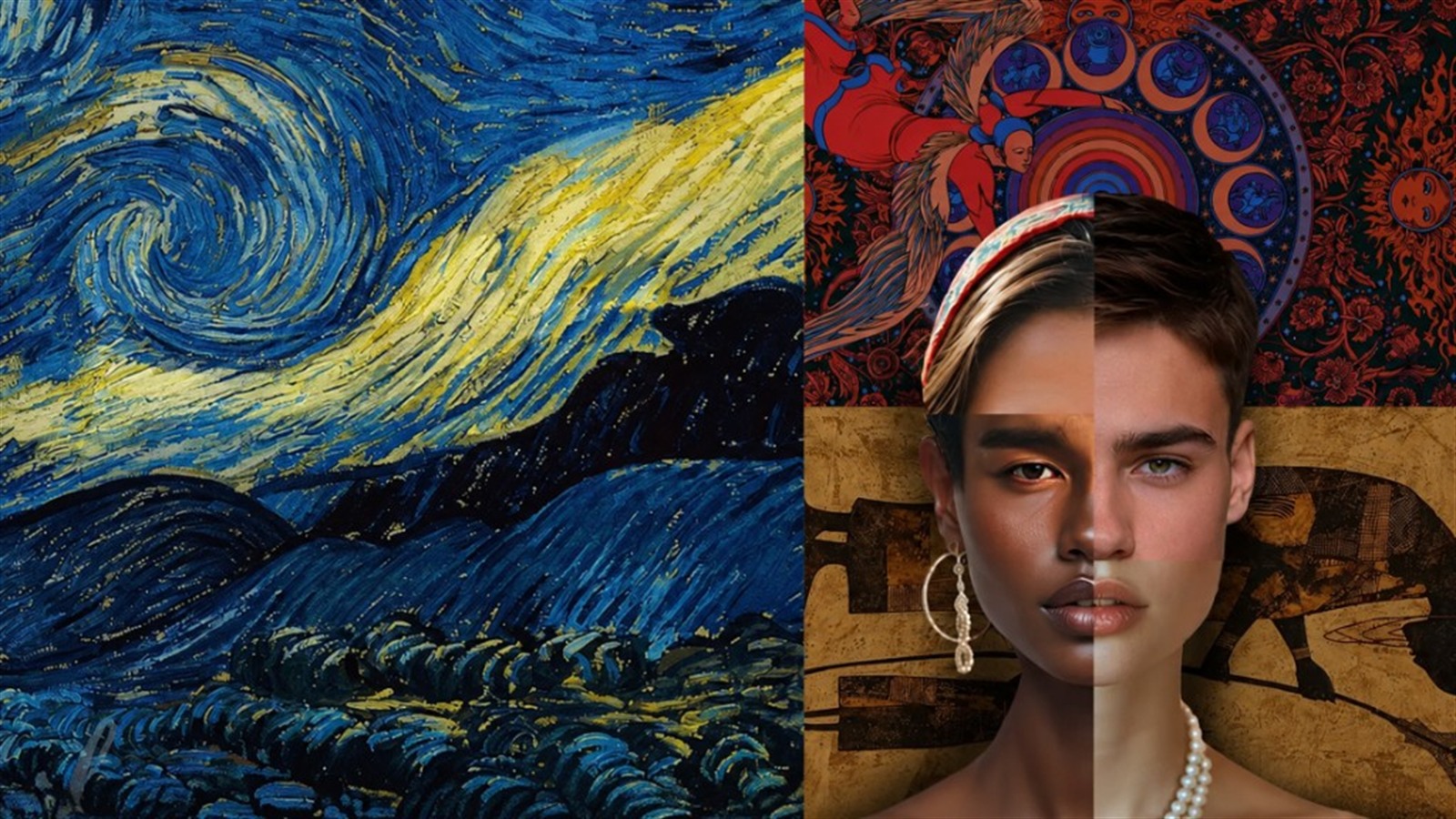
Design has transformed marketing trends around the world. On a larger scale, through marketing, it has enabled social and economic development for nations. In addition to being a tool for creating visual appeal, it is also a medium of communication, reflecting the purpose and vision of the designer. By briefly looking at the history of how design has shaped marketing perspectives of countries, it becomes easy to understand where it is headed, drawing a common channel of cross-culture design. Design has evolved in countries differently, catering to regional needs. After globalization, companies shifted their focus from a localized approach to a bigger view at the global level. This led to a need for differentiating factors to stand apart from the styles of other countries. Thus, design became more bent towards reflecting a country’s overall approach.
Individualistic vs. Collective Approach
The broadest parameter for bifurcation when it comes to the type of stance towards design would be whether a nation envisions design individualistically or collectively. Before postmodernism influenced notions across the world, design used to be an embodiment of a brand or person’s perspective, which was concerned primarily with production and sales. The style and typography were based on the contents, quality of the products, needs of the users, and feasible supply of products. Rarely was there a sense of brand value or brand identity. Packaging was highly basic and just meant to be for containing purposes. However, postmodernism changed everything. In the western world, individuality rose as a need rather than a standpoint — starting from personal levels and eventually impacting markets as well. Markets moved from being native to spreading to neighbouring countries and cross-culture trade took place. Hence, countries wanted an identity to demarcate themselves from other western brands and companies. Culture too, began to appear in brands in a way that highlighted the solitary and highly self-aware life glorified in the west.
On the contrary, the eastern world held on to the viewpoint that human beings don’t exist by themselves but as an active part of a social or familial circle. This belief is reflected prominently in marketing mannerisms in the east. Companies and brands started to project cultural elements with a sense of pride, owing to their post-colonial development.
Symbolism
As global culture transformed towards being more inclusive trade-wise, symbolism emerged as essential for brands to stand out and leave an impression on the global platform. Design became the ultimate tool for brands to gain a symbolic presence and a channel to carry forth a sense of culture towards marketing. As production became abundant after the Industrial Revolution, symbolic designs boosted global presence for most countries. However, countries began to deviate from the common framework for design or the popular polarity of being individualistic or collective towards being unique with the purpose they bring through designs to impact global markets.
Influence of Bauhaus
What started as an art movement in Germany influenced modern design internationally. The ‘Bauhaus’ movement propagated simplicity and minimalism in design and preferred functionality over form. Aesthetics were secondary to brands, and design focused mainly on the qualitative and operational aspects. It spread from Germany to all of Europe. Bauhaus designs, when adopted by countries like France, focused more on the ideologies and philosophical perspectives of the countries rather than cultural influences.
Swiss Design
Known as the International Typographic Style, Swiss Design is considered a direct outcome of the Bauhaus movement. Based upon Bauhaus principles, Swiss design emphasized clarity, readability, and objectivity. Another way to look at Swiss design would be from how it involves only the economic trend from Swiss culture. As Switzerland is not rich in natural resources, the Swiss pride vests in fine workmanship. Because the demand for production is less in local markets in comparison to the rest of the world, Swiss brands do not compromise on quality and show a mix of industrial and artisanal working methods. This led to designs being minimalistic with clear and loud typography. Ernst Keller, who is considered as the father of Swiss design, initiated grid systems in design with a belief that designs should be organized and minimal visually but be flexible enough to cater to motives by using the right typefaces. With time, Swiss design set the benchmark for typography and minimalist design.
Japanese Design
Another country that takes charge in the east for sleek and minimalist design is Japan. Unlike Swiss design, Japanese design is more of a comeback and a show of strength, integrity, and potential. Japan underwent natural and socio-political calamities and rose through the rubble with immense optimism. The same spirit is reflected in Japanese design, especially in the post-war designs. However, Japanese brand designs exhibit a polarity — with aesthetically appealing designs and futuristic designs being the extreme ends. When it comes to pop culture merchandise and related products, the design is vibrant, extensive, and visually cluttered. On the contrary, when it comes to robotics or tech, Japanese designs tend to be sleek, futuristic, and minimal — symbolizing Japan’s significant growth in the corresponding sectors.
African Design
According to Jacques Giard, design is connected to a broader context including political systems, economic modes, and cultural aspects. When it comes to what are globally considered by the West as third world countries, design was not efficient initially as it failed to reflect political dimensions. In these countries, the socio-political background has a massive influence on markets and product design. As a result, modern African designs tend to have a post-colonial style of design. On a general note, African nations have a sense of pride in diversity as well as their economic and social rise post-colonial oppression. Consequently, designs act as a tool to break the stereotypical notion around African representation, which is portrayed as singular on the global scale. They’re inclined towards vibrant designs that portray them as a unique market in the African landscape, with peculiar visions towards growth. Designs also serve as a solution for problems in Africa, hence elevating economies in a larger sense.
Indian Design
Be it marketing for any domain, culture is at the core of the outlook Indian companies adhere to. India proudly carries its cultural diversity on the global platform with vibrant and artistic designs that act as a testament to India’s rich history and rapid economic growth. With India being one of the biggest market economies of the world, Indian design frameworks are too layered to define in a single go. Designs that aim for global eyes are more varied, adding the “Indianness” to every frame. On the other hand, designs aiming for local markets and with Indians as their prime audience, utility and functionality take the center stage in design. Besides this, local Indian designs also strive towards being eye-catching. Product designs focus more on solution-oriented frameworks rather than aesthetics; this is due to the consistently high demand in the Indian market. Products also carry the sense of “Customer is King“ into perspective while creating designs, looking at solutions from the user’s view, and merging with the company’s vision.
Need for a Global Design Appeal
Cross-culture design has become the new norm of marketing. As a result, countries have to give a global appeal through their designs while also holding on to their distinctive visions. As per a report by Cognitive Market Research, the global graphic design market had a value of USD 49.13 billion in 2024, which is expected to grow at an annual rate of 1.6% from 2024 till 2031. Hence, global appeal is no longer an extensive luxury but the need of the hour. There are various advantages to it. Global design appeal helps businesses reach a wider range of audiences, enabling cross-culture solutions. Today, the design industry has adopted a solution-oriented approach towards global issues by making efforts for sustainable outcomes such as reducing carbon footprint across the world. By visually generating awareness and inclusivity, design is bringing countries together to acknowledge and solve common problems.