
Design Insights October 6, 2026
By Zaina Rafique
“The war is over, but the battle for the soul of man goes on.” — George C. Marshall
A war may end when the attacks stop, but recovery can take years, sometimes generations.
Homes have to be rebuilt. Roads, hospitals, and water systems need to function again. Land has to be made safe. People may return with injuries that permanently change how they move through the world, while entire communities have to rebuild livelihoods disrupted by conflict.
This is where design and technology can take on a different role. The same technological ingenuity often associated with conflict can also support what comes after it. The goal goes beyond replacing what was destroyed.
It is about helping people participate in ordinary life again.
Rebuilding the land that feeds people
For many communities, recovery begins when the land becomes usable again.
Cultivable land may be damaged, cut off by broken infrastructure, or made unsafe by unexploded ordnance. When farmers cannot return, livelihoods and local food supplies are affected.
In Ukraine, satellite imagery is helping identify farmland that may need mine clearance before cultivation can resume. The technology helps teams decide where to act first and gives farmers a safer route back to production.
Recovery becomes real when the field can be worked again.
Reconstructing places through digital technology
Historic buildings and cultural sites often carry memory across generations. When they are damaged, rebuilding depends on understanding what existed before.
Digital tools can help preserve that information. Drone imagery, photogrammetry, and 3D scanning can create detailed records of structures and their remaining features.
These records can guide reconstruction and help communities retain a connection to places that have been altered or lost.
Here, technology helps preserve the memory of a place while its physical form is being rebuilt.
Designing the body back into everyday life
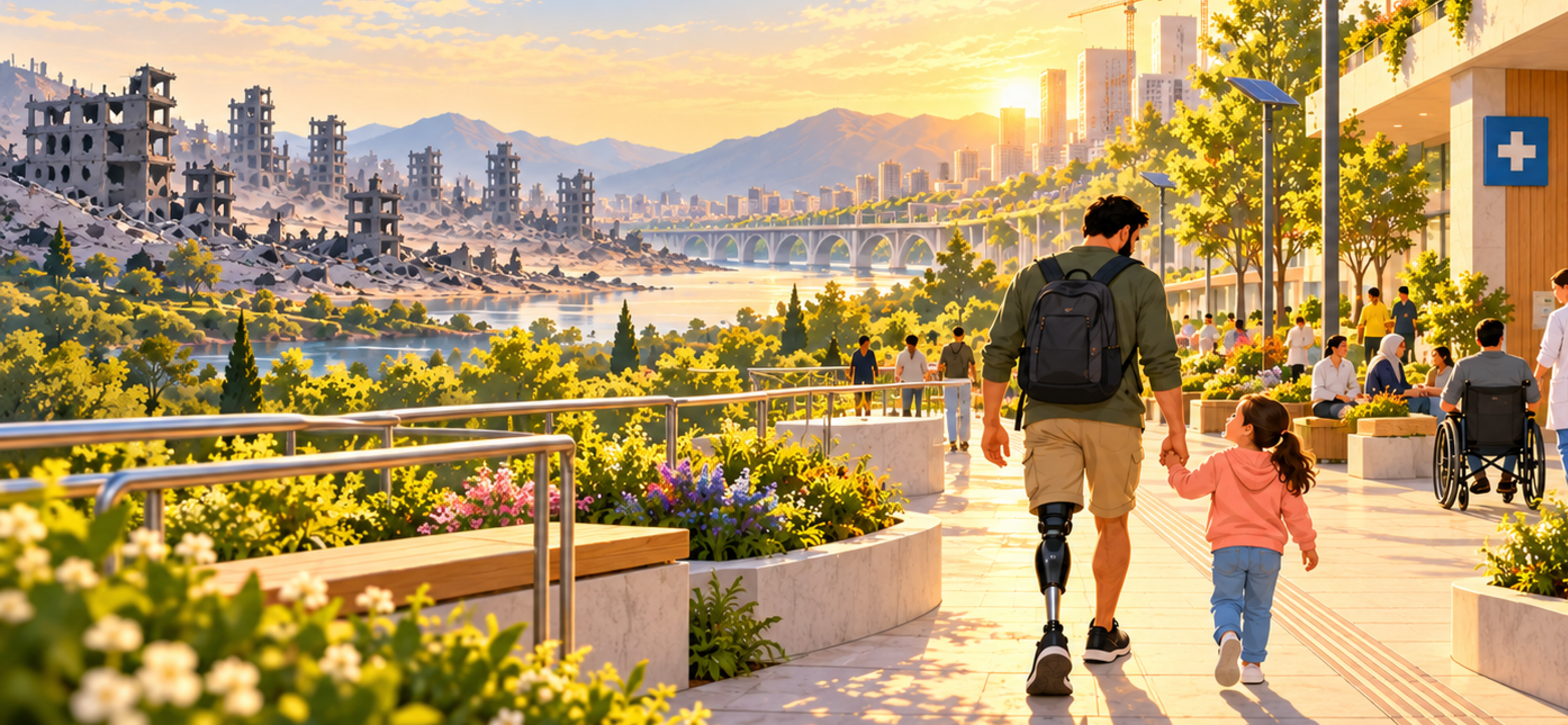
For someone who loses a limb during conflict, recovery is shaped by how well the world around them adapts.
This is where inclusive design matters. A prosthetic has to work with the person’s body, movement, daily routine and environment. Advances in 3D scanning and myoelectric systems are making that fit more precise and responsive.
The real measure is whether the person can move through everyday life with greater independence.
Making Recovery Part of the Design
As the world moves through conflict, displacement and civil unrest, rehabilitation technology will matter more than ever.
That makes inclusive design a practical investment in recovery. Prosthetics and assistive systems need to be affordable, repairable, and usable in the places where people actually need them.
Prosthetics are only one example. The same thinking belongs across recovery systems and essential services: design around the realities people return to, and around what helps them participate in everyday life again.
As technology advances, inclusive design will increasingly shape how well recovery works for the people it is meant to serve.

