
Design Insights August 12, 2026
By Zaina Rafique
We all grew around a blue bottle that sat in our shelves, bathrooms, dressing tables, hostel rooms, and to a great extent, in our childhood memories. Over time, Parachute's coconut oil became the star people would recognize and want to purchase instantly. That's why Sands Express thought of bringing the lens out, to study Parachute's branding strategy. But before we hop into that, we must remember a fact. Parachute didn't bring anything innovative or new. In Indian homes, coconut oil was already a part of hair care routines, kitchens, and rituals. The commodity was unbranded and local, without people associating it with anything. It was sourced from local producers, wherein quality could vary, packaging was basic, and trust came from habit.
Turning Trust into the Strongest Brand Asset
Before the blue bottle became famous, the brand answered a very basic consumer question: can I trust what I am buying?
That question matters deeply for a commodity like coconut oil. People rarely look for glamour when they buy it. They want purity and familiarity. Parachute understood this clearly. Its branding made coconut oil feel dependable.
Sealed packaging and the promise of purity gave people a reason to move from loose oil to a packaged brand. Over time, that changed the way people looked at something as usual as coconut oil.
The Blue Bottle Magic
On a crowded retail shelf, Parachute's blue bottles are hard to miss. It is simple, visible, and easy to remember, eventually becoming a visual code for coconut oil.
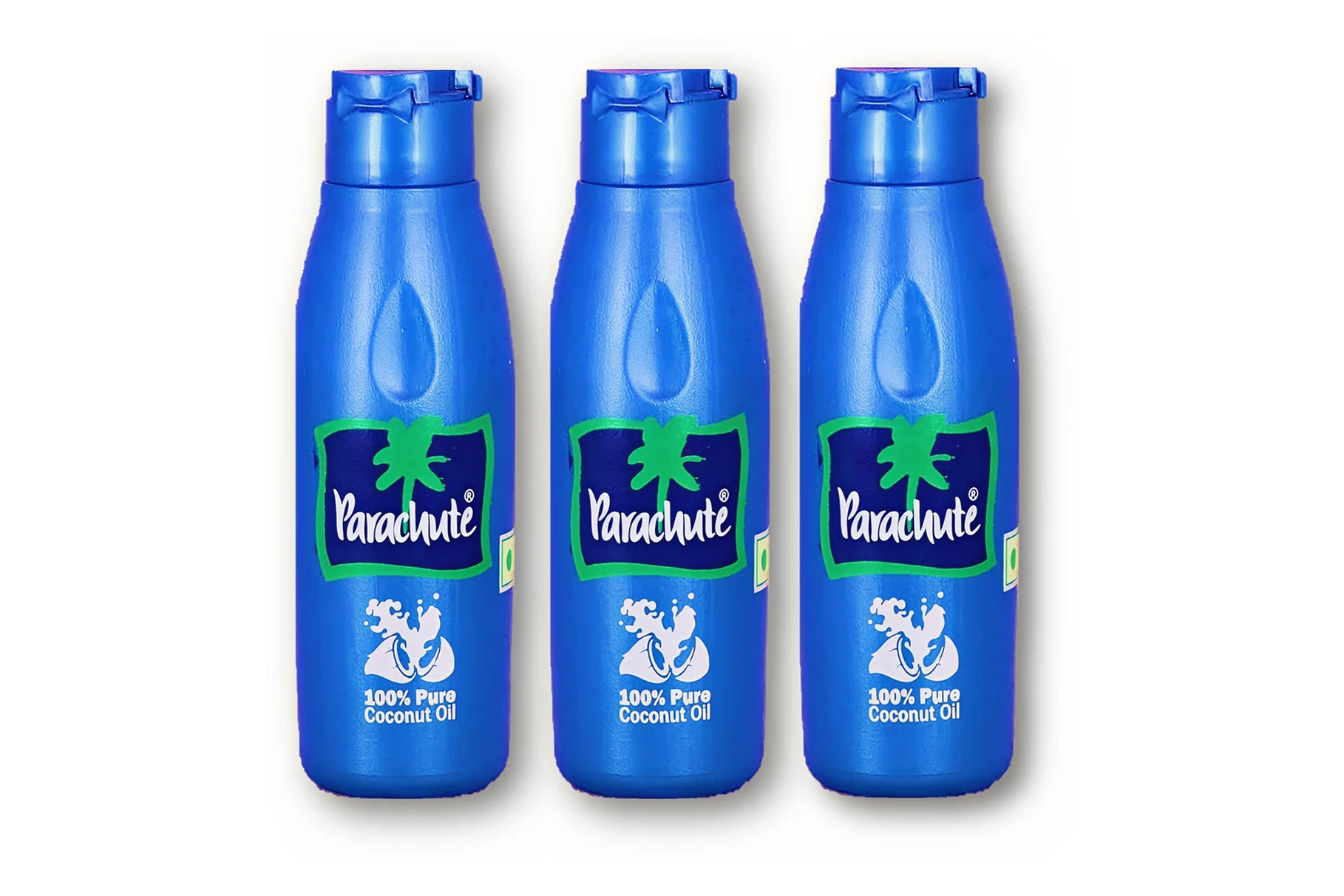
The colour, shape, label, and repeated presence of the pack, built recognition over years. It did not need to explain itself every time. People already knew what it meant.
That kind of recall is difficult to create quickly. Many brands can learn consistency from Parachute. Distinctiveness does not always come from adding more. The blue bottle worked because it carried both function and feeling. It looked clean. It felt familiar. It separated Parachute from loose oil. It made the brand recognizable across stores, homes, and generations.
Entering the Indian Life
Parachute's branding was shaped by how India actually buys.
A brand cannot live only in campaigns. It has to fit into real purchase behaviour. Smaller packs make trial easier. They make branded products accessible to more people.

Harsh Mariwala's story about learning from a small-town retailer captures this well. For many Indian households, affordability and pack size influence choice as much as preference. The idea that customers needed easier, smaller packs came from retail floors, close to actual buying behaviour.
This is a critical part of Parachute's success. The brand did not appeal to the market to change first. It shaped itself around how people already bought coconut oil. From urban shops to smaller markets, the Parachute bottle made itself present in India's daily life.
Used Culture as a Catalyst
India takes hair care very seriously. And that exact emotion that has resided in Indians for generations, is what Parachute picked up.

The marketing strategy showed champi as a personal memory. A mother or grandmother oiling a child's hair, and other stories that associate the product with affection and trust. The emotion already existed, Parachute gave it a visual language and visibility.
Protecting the Core
Many legacy brands lose a grip over their core brand message when they expand. Parachute avoided that. Coconut oil remained the memory anchor. Around that, the brand created extensions like Parachute Advansed and other hair nourishment variants.
This was a smart move because habits change. Younger audiences may oil their hair less often. Some may prefer lighter formats. Some may look for faster routines. A brand that stays locked in one format can slowly lose relevance.
That balance is difficult. A brand can stretch too far and lose meaning. It can stay too narrow and lose relevance. However, Parachute responded by adding newer formats and benefits while staying connected to nourishment, care, and trust.
Its current numbers show that the core still carries serious business weight. Marico's Q4 FY25 presentation places the coconut oil franchise at around 63% market share in MAT March 2025, with Parachute Rigids holding around 54% within coconut oil. Parachute Coconut Oil also contributed 33% of India revenues in Q4 FY25.
What brands can learn from Parachute
Parachute's branding strategy offers a clear lesson for any brand trying to build memory in a crowded category.
Start with the real problem. For Parachute, the problem was trust in a largely unorganized category.
Create a clear signal. For Parachute, that signal was the blue bottle and the promise of purity.
Build around real behaviour. For Parachute, that behaviour was how Indian families already used coconut oil.
Make the product easy to buy. Smaller packs and wide availability helped the brand enter more homes.
Then repeat the right signals long enough for people to remember them.
In a nutshell- Parachute understood the assignment!
If you are building a brand, begin by studying what your audience already trusts, repeats, and remembers.
At SandCup, we believe the strongest brand positioning often begins there: not with what a brand wants to say first, but with what people already understand, value, and carry with them.
Explore Brand Positioning at SandCup
Be a part of our world and gain more insights on design and innovation!